-
What is Powerbox?
PowerBox is a smart, portable energy and communication hub designed to empower communities during natural disasters. Built with cutting-edge technologies like solar energy, IoT, and AI, PowerBox ensures reliable access to electricity and decentralized communication when conventional infrastructure fails.
"When nothing works, PowerBox does"
-
How Does It Work?
Smart Communication Architecture
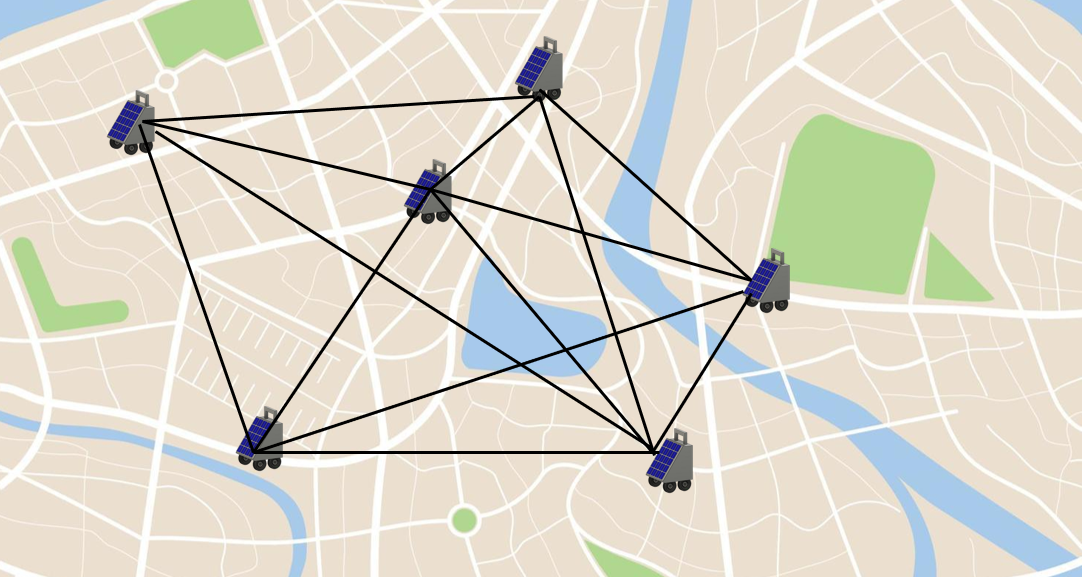
PowerBox creates a mesh network topology that spans across the city, forming a new layer of communication infrastructure during disasters, warzones or whenever traditional communication fails. Like a spider web surrounding the urban landscape, this network ensures decentralized, resilient connectivity even when traditional systems collapse.
(Visual representation: Spider-web network overlaying a cityscape)
AI-Powered Resource Management
Each PowerBox unit is equipped with embedded sensors and integrated AI models to detect crowd presence and estimate headcount in real-time. This data enables automated resource allocation—such as power distribution, supply requests, or bandwidth prioritization—making the system both intelligent and self-optimizing.
Whether it's tracking movements, managing energy output, or optimizing communication load, PowerBox adapts dynamically to the needs of its environment.
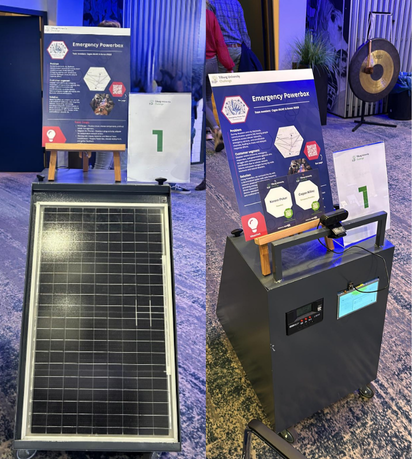
(Visual representation: First Prototype of PowerBox)
Mini PowerBoxes & Mobile Adapters
We are currently developing plug-in adapters that can connect directly to smartphones, transforming them into part of the PowerBox mesh network. These compact units act as Mini PowerBoxes, providing both emergency power and connectivity when users need it most.
These adapters are lightweight, portable, and designed for rapid distribution in disaster zones—empowering individuals to stay connected and contribute to the resilience of the overall network.
Technical Details
PowerBox units communicate via a robust LoRa-based mesh network, with each node capable of covering a 2-kilometer radius. This mesh topology allows units to relay data across multiple hops, ensuring city-wide coverage without relying on cellular infrastructure. To ensure resilience during high-traffic scenarios, the system dynamically distributes communication over multiple frequency spectrums, minimizing signal interference and reducing the risk of frequency crashes.
Each PowerBox is powered by a 12V 24A solar panel, paired with a smart energy storage and battery management system. This configuration provides reliable, off-grid power, ensuring continuous operation even in challenging environments. The system is designed to maximize energy efficiency, providing day-and-night functionality without the need for external power sources.
In the near future, PowerBoxes will be able to provide internet connectivity and voice-over-RF communication. These upgrades will enable PowerBox units to serve as a complete communication platform during disasters, offering internet access to areas where traditional infrastructure has been damaged, as well as providing voice communication capabilities over radio frequencies for greater flexibility in emergency situations.
Additionally, the smartphone plug-in adapters will allow individuals to participate in the mesh network while also providing emergency charging capabilities. This will significantly enhance the overall resilience of the system, empowering users to contribute to and benefit from the network even in the most isolated environments.
-
Contact Us
We are students at Tilburg University, passionate about building resilient, smart solutions for real-world problems. If you're interested in our work, collaborations, or just want to say hi — feel free to reach out! You can contact us through our LinkedIn profiles. We're always happy to connect.
LinkedIn: Çağan KılınçLinkedIn: Kerem Peker